A barista pours milk into espresso. The milk swirls. A leaf forms. The barista slides the cup across the counter. The video ends. Eighteen seconds, beautifully shot, beautifully soundtracked, four hundred views. A week later, another one. Same camera angles. Same trending audio. Same four hundred views.
This is the most common reels failure mode in food and beverage. The video is technically good. The product is photogenic. The retention graph drops off a cliff inside the first two seconds. Most people who scroll past it never see the leaf.
The reason is structural. A pour is an event with no hook. The viewer has no reason to stop scrolling — they've seen pours before, the first frame is a cup and a milk jug, there's nothing in the opening that promises a payoff worth waiting for. The algorithm sees the early drop-off and stops showing it.
The first 1.5 seconds are everything
Instagram and TikTok's decisions about whether to push a reel happen almost entirely in the first second and a half. If your retention drops below the platform's threshold in that window, the reel dies — no matter how good the rest of it is.
This is why "beautiful pour" reels routinely underperform. The first frame is mundane. The viewer's thumb is already moving by 0.6 seconds. By the time the milk starts forming a pattern, half your audience is gone.
The 4-beat structure
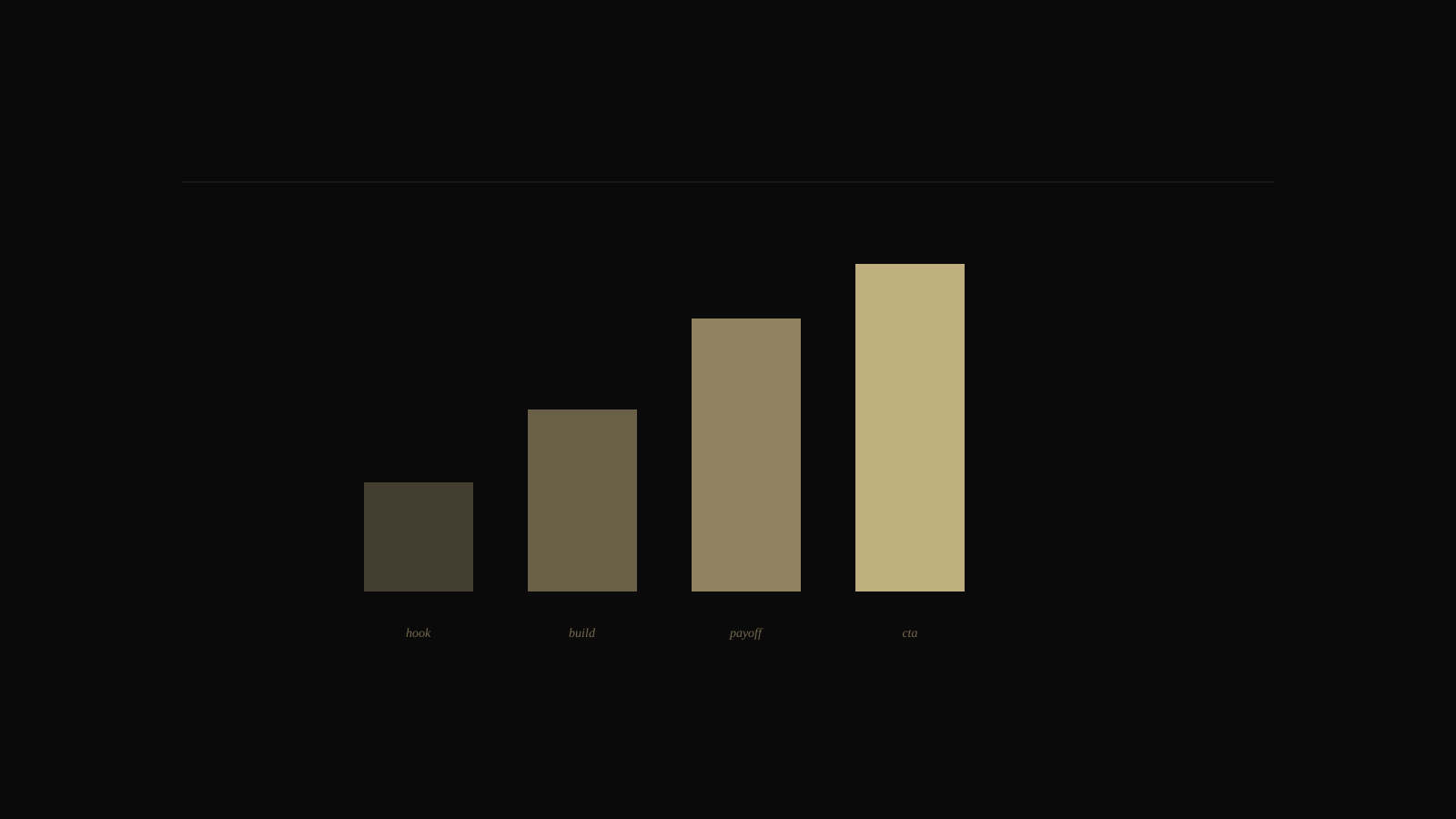
The reels that work in F&B follow a four-beat structure, with each beat doing a specific job. The structure isn't a formula — it's a way of making sure each second of the reel is earning its keep.
Beat 1 — Hook (0–1.5 seconds)
One job: stop the scroll. Everything else is secondary. The hook should make the viewer ask what is this or why is this happening in the first half-second. Strong hooks: a confused-looking customer staring at something, a hand pulling something unexpected out of frame, an extreme close-up of an ingredient before context, a bold on-screen text question.
Weak hooks: a wide shot of your café from outside. A logo card. A pour from frame zero. Anything that requires viewers to wait for the payoff to understand what's happening.
Beat 2 — Build (2–7 seconds)
The hook earned the attention. The build keeps it. This is where you set up what's actually going to happen — but you have to keep escalating the visual or narrative tension so the viewer doesn't lose interest.
Good builds add information at a steady rhythm: cuts every 1–1.5 seconds, on-screen text appearing in beats, slight camera movement instead of static. Bad builds linger on a single shot for four seconds in the middle of the reel — the kiss of death.
Beat 3 — Payoff (8–13 seconds)
The thing the hook promised. The leaf forming in the pour, the dish landing on the table, the reveal of what was being made. This is the beat where most café reels actually start — and it's why they fail. The payoff has to be on a foundation of hook + build, otherwise nobody sees it.
Beat 4 — CTA (14–15 seconds)
The forgotten beat. Most café reels end on the payoff and assume the viewer will figure out the rest. They won't. The last second has to do work: a name, a location, a single line of text, a verbal mention if there's narration. "Saturdays only. We're on [street]." One sentence. That's what turns a watched reel into a walked-in customer.
Most café reels start at the payoff. By that point, half the audience has already scrolled.
What kills reels (the one mistake)
If we had to point at one thing that kills more F&B reels than anything else, it's this: opening on the product.
The cup. The dish. The cocktail. The pastry. The very thing the reel is about — shown as the first frame.
This feels logical. The product is the point of the video. Lead with the product. But it's the opposite of how attention works on social. Leading with the product is leading with the answer. There's no question, no curiosity, no reason to keep watching. The viewer has seen the punchline before the joke started.
The fix is a one-second delay. Open on something else — a hand, a face, a mistake, a question on screen, a sound — and reveal the product in the build. That single shift changes a 2-second average watch time into a 9-second one. And 9-second average watch time is what gets the algorithm to push the reel to non-followers.
Test it on the next one
Take whatever café reel you're about to post next. Look at the first frame. If it's the finished product, you've already lost half your reach.
Reshoot the opening. One second of something that's not the product. A hand reaching for a tin of beans. A shadow falling across the counter. A regular customer's face mid-sentence. Then cut to the rest of the reel as planned.
Watch what happens to the watch-through rate. The math of this single change is what separates a café Instagram that grows from one that plateaus at 800 followers for three years.