Walk through any growing Indian city and you'll find the same pattern. A new café opens with a queue out the door for the first six weeks. By month four, weekday afternoons are quiet. By month nine, the team is throwing weekend brunches and discount Tuesdays to keep the lights on. The food is good. The space is good. What's missing is the brand — the reason someone drives across town instead of stopping at the closest place. India's café market is now real money — domestic F&B is part of a hospitality ecosystem projected to grow to US$ 52 billion by FY27 — and the cafés that succeed in it are the ones that have figured out brand, not just food.
This page is how we think about that. What we've watched work. What we've watched fail. The structural reason most café marketing underperforms — and the loop that, once you build it, keeps tables full without resorting to discounts.
Why most café Instagrams don't fill tables
A café opens. Owner hires a freelance photographer for a day. Posts go up — latte art, the new croissant, a shot of the seating area, a quote about Mondays. Six months in, the feed is two hundred posts of similar content. Engagement is plateaued. Saved posts are flat. New customers aren't coming from social. The owner concludes Instagram doesn't work for cafés.
Instagram works for cafés. That Instagram doesn't. Here's why: it's all bottom-of-the-pyramid content. Latte art and dish photography are the easiest things to post — they're already on the bar, the light is fine, anyone can shoot them with a phone. Which is exactly why every café in the city is also posting them. The feed becomes wallpaper. Pretty, indistinguishable, forgettable.
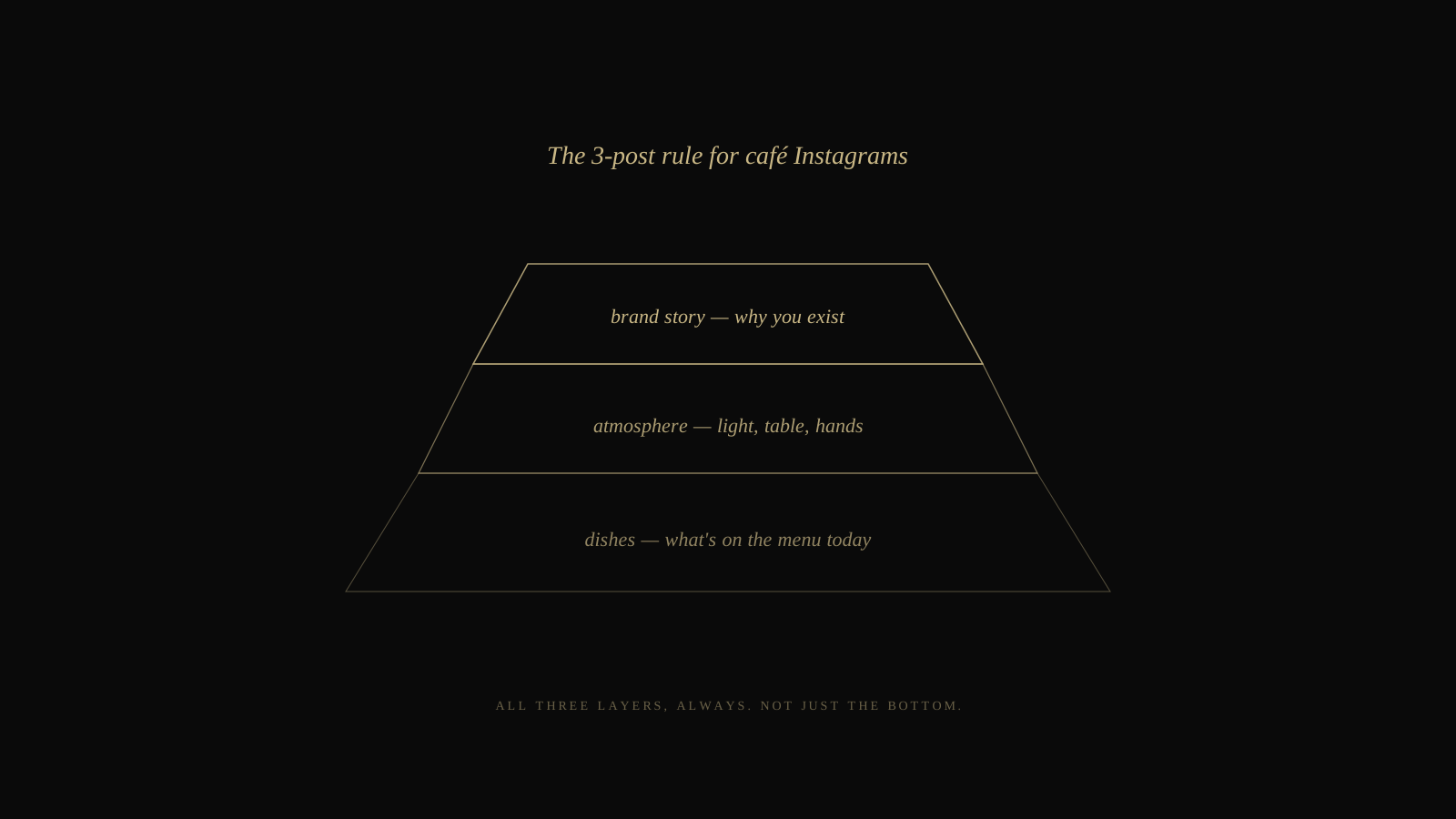
Cafés that genuinely fill tables run three layers of content together — and most cafés only run one.
Layer one: dishes
What's on the menu today. The new pastry. The hot dish. The seasonal drink. This is the operational layer — fast to shoot, easy to post. Everyone runs this. Necessary, not sufficient.
Layer two: atmosphere
Hands holding a cup. Late-afternoon light through the window. The barista mid-pour, slightly out of focus. Two people at a corner table. The texture of the tablecloth. This is what tells a viewer how it feels to be at the café — and feeling is what drives the decision to visit. Most cafés undershoot this layer because it requires more deliberate art direction. It's also the layer that most reliably converts a scroll into a Google Maps search.
Layer three: brand story
Why the café exists. Who runs it. Where the beans come from. The owner's last trip to a roastery in Coorg. The Sunday-only sourdough that started as a side experiment. Behind-the-scenes from the kitchen. This layer builds parasocial relationship — the feeling of knowing the place before you've walked in. It's the slowest to compound but the layer that produces the most loyal customers, because they're not just choosing your latte over the next one. They're choosing your story.
Cafés that consistently fill tables run all three layers. Each week. Every week. We've seen the math play out: feeds running only layer one plateau within four months. Feeds running all three layers compound over twelve months — engagement, saves, profile visits, and direct messages all moving in the right direction.
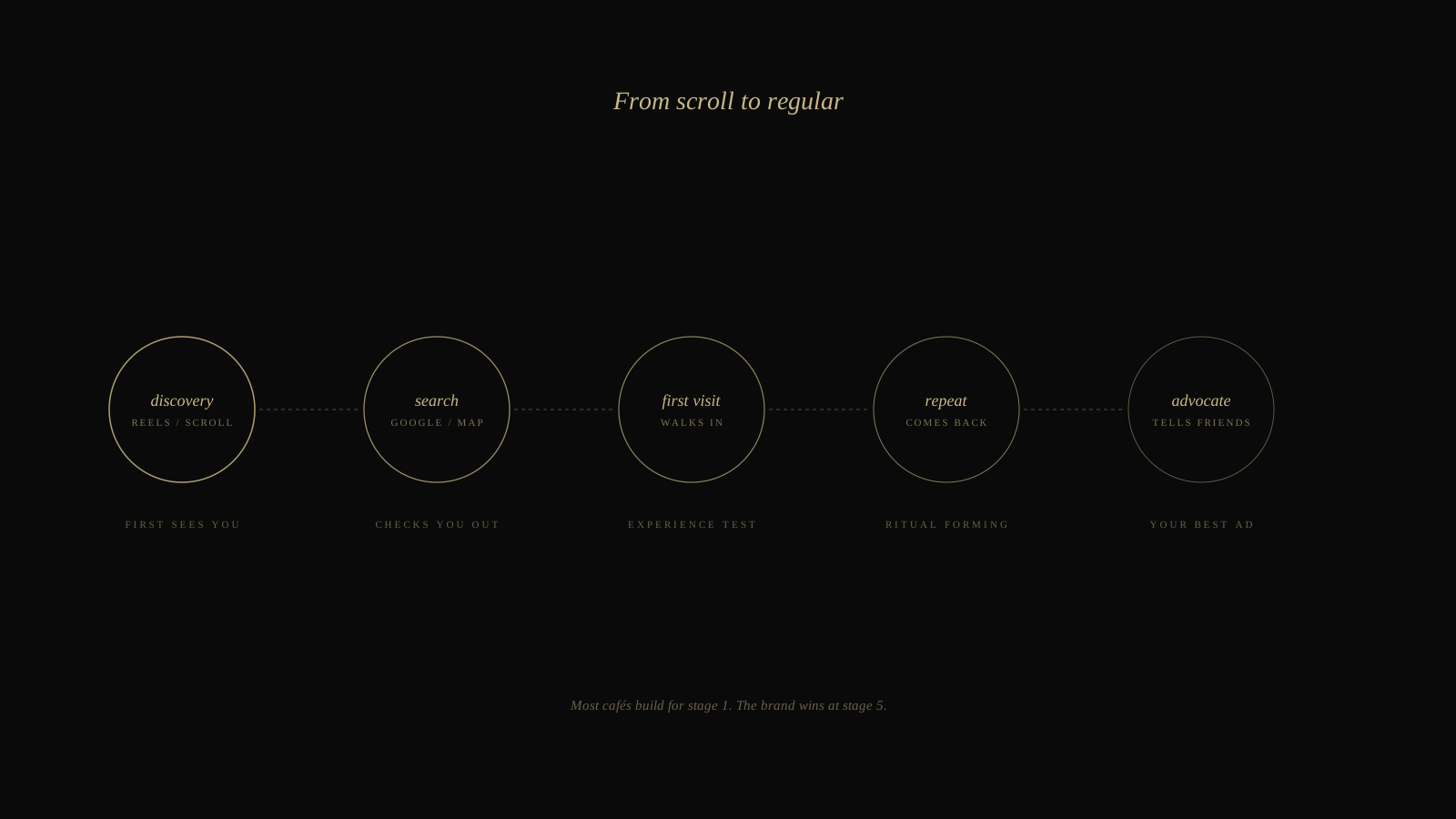
The customer journey is five stages, not one
Most café marketing is built for stage one — getting noticed. Reels. Trending audio. Dish photography. Discovery is necessary but it's the cheapest part of the funnel. Brand wins at stages four and five — repeat visits and advocacy. That's where margin lives. That's where tables stay full on a Tuesday.
Each stage needs its own design discipline:
- Stage 1 — Discovery. Reels on Instagram. Short-form video on YouTube Shorts and Pinterest. Trending audio used selectively. A clear visual hook in the first second and a half. A four-beat reels structure we've seen consistently outperform random posting.
- Stage 2 — Search. Once they've discovered you, they Google you. The first thing they see is your Google Business Profile and your website. Your hours need to be accurate. Your photos need to be better than a phone shot. The website needs to load fast and look like the café feels.
- Stage 3 — First visit. They walk in. The brand experience either matches the social or it doesn't. If the staff doesn't know what the seasonal menu is. If the music is wrong. If the table is sticky. The brand fractures right there. Most cafés lose stage 3 to operations they haven't designed.
- Stage 4 — Repeat. A first visit becomes a habit when something specific happens — a barista remembers the name, a regular's order is started before they ask, a small touch (a stamp on the receipt, a hand-written note on a take-away cup) creates memory. Habit is what makes a café financially viable. Discovery is just the front door.
- Stage 5 — Advocacy. Regulars bring their friends. The café becomes "our place." A guest posts a Story tagging you, organically. Google reviews get written without being asked. This is the stage where marketing spend stops being needed because the customer base is doing the work.
One owner we worked with had a beautiful café with a decent following on Instagram and a steady-but-slow weekday business. We sat through three days at different times — morning rush, afternoon lull, evening regulars — and saw that stage 4 was where the brand was leaking. Regulars were coming back, but nothing about the experience signalled recognition. We designed three small rituals (a returning-customer signal at the counter, a quiet menu-of-the-week card slipped onto the table for repeat visitors, a hand-numbered stamp on takeaway cups). Six months later, the café's weekday covers were up significantly, and a meaningful share of new customers were arriving via "my friend brings me here." That's stages 4 and 5 doing the work that stage 1 used to.
A café fills tables when guests arrive having already decided. The work is making that decision happen before they walk in.
— A working principle in our café engagements
What we deliver — the full stack
Cafés are a marketing category where most operators end up juggling four or five vendors — a separate photographer, a freelance social manager, an SEO consultant, a website vendor, and a paid-ads person. The five rarely talk. The brand fragments. We do this under one roof so the visual library, the social voice, the website, and the paid layer all pull in the same direction.
Strategy & identity
Two to four weeks. We sit at the café across different times — the morning rush, the afternoon lull, the evening regulars. We talk to staff, talk to a sample of customers, and read the existing reviews. The output: positioning, brand narrative, vocabulary system, and a complete identity — logo, type, colour, photography direction, voice, and writing guidelines. Plus the spec for menu collateral, signage, takeaway cups, paper bags, and any other touchpoint where the brand is expressed.
Content & reach
This is where the work compounds. Our F&B photography studio runs the shoot days — typically one full day produces enough content for three to four months across all three pyramid layers. Plus reels, Instagram routines, the brand journal, and a content calendar that runs alongside your menu seasons. We also handle the messy operational layer that most agencies skip: Google Business Profile photos, OTA-equivalent listings (Zomato, Swiggy, Google Maps), and the small but compounding work of asking the right customers for the right reviews at the right moment.
Discovery & growth
Website built for local discovery and direct ordering where applicable. SEO scoped for café-relevant intent ("specialty coffee Udaipur", "breakfast café near me", "work-friendly café Pune"). Google Maps optimisation. Meta and Google paid layers, scoped tightly to your service radius. WhatsApp Business setup with quick replies for reservations and queries. Quarterly performance reviews looking at footfall patterns, repeat-visit rate, and cost-per-acquired-regular — not just impressions.
The cities we work with
Our office is in Udaipur, but our café and restaurant work has spanned the country. Active engagements and past work across Udaipur, Jaipur, Pune, Bangalore, Mumbai, Hyderabad, Indore, Chandigarh, Ahmedabad and Delhi. For shoots, we travel for production. For ongoing content systems, we set up local routines that the café team can run with light remote oversight from us.
The model scales — what works for a single-location independent café in a tier-2 city scales meaningfully to a small chain across three cities. For chain operators, we also handle the brand-system side: ensuring the visual language stays consistent across outlets, while the local content layer adapts to each city's audience.
— Frequently asked
Questions we hear often.
How quickly can a café see results from a rebrand?
For local discoverability — Google Maps rank, search results for "best café near me", Instagram reach within the city — well-run cafés begin seeing measurable lifts in four to eight weeks. Footfall typically follows in three to four months as the new content compounds. The slower outcome — guests describing the café in a way that brings their friends — takes six months and beyond, because that requires repeat visits and word-of-mouth to develop.
Most café Instagrams are 90% latte art. Is that wrong?
Not wrong, just incomplete. Latte art is the easy post — fast to shoot, predictable to engage. But it's the bottom of the content pyramid. Cafés that consistently fill tables run three layers of content together: dishes (what's on today), atmosphere (light, hands, the table), and brand story (why the café exists). When all three layers run together, the feed builds desire over time. When only the bottom runs, the feed becomes wallpaper — pretty, but indistinguishable from every other café in the city.
Is a professional photoshoot really worth the cost for a café?
Yes — and the math is more favourable than most owners realise. A single shoot day produces enough content for three to four months of social, plus website hero images, Google Business profile photos, menu collateral, and ad creative. A first-time visitor decides to come in based on a photograph. If your photographs are dim, blurry, or shot under tube light, you're filtering out the very customers you want. The cost of a shoot is recovered in roughly twenty additional table covers.
Do you only work with cafés in Udaipur?
No. Our café and restaurant work spans India. We're based in Udaipur, but our F&B engagements have run across Jaipur, Pune, Bangalore, Mumbai, Hyderabad, Indore, Chandigarh and Ahmedabad. For shoots, we travel for production. For ongoing content systems, we set up local routines that the café team can run with light remote oversight from us. The model scales — what works for a single-location café in Udaipur scales to a small chain across three cities.