India's hotel industry is on a tear. The branded segment was worth roughly US$ 32 billion in FY20 and is projected to reach US$ 52 billion by FY27. Resorts, specifically, are the fastest-growing category — outpacing every other format at over 13% CAGR. More than 70,000 new hotel rooms are being added by 2030. Domestic travel grew 40% year-over-year in 2025. The wedding economy alone moves over US$ 600 million through hotel bookings annually.
And yet, walk through a resort website at random and you can't tell two of them apart. Same suite photography. Same "experience our world-class spa." Same drone shot of an infinity pool. Most of India's hospitality marketing is borrowing the same vocabulary, photographing the same fifteen scenes, and competing for the same OTA visibility. The market is growing — but inside it, individual brands are getting more interchangeable, not less.
That's the gap we work in. Because the brands that genuinely break through aren't louder than the others. They're more specific. They have a point of view that's hard to copy, a vocabulary that's their own, and a set of rituals guests can actually describe to a friend a year after checking out. This page is a working playbook for how we build them.
Why most resort brands fade into the mountain
Sit in front of a resort's Instagram for ten minutes. You'll see the same five posts. The infinity pool at golden hour. A flat lay of breakfast on a wooden tray. A couple in white robes from behind, looking at a view. The brass door knocker close-up. A drone shot at sunset. These are not bad photographs. They're familiar photographs. And familiarity is the enemy of memorability.
The reason this happens is structural, not creative. Most properties hire a photographer for two days, hand them a shot list copied from a Pinterest board, and end up with a library of "luxury hotel content" that looks indistinguishable from every other luxury hotel content in the country. The marketing team, working from this library, posts the safest images. The OTAs pull the same images. The website lays them out the same way. Twelve months later, the brand has not been built — it's been laundered into the same thing as everyone else.
The ones that escape this trap have done one thing differently: they've sharpened their specificity. They've decided who the property isn't for, and that decision shows up in everything from the welcome ritual to the colour of the in-room stationery. The result is a brand that polarises slightly — which is exactly what makes it memorable. Guests don't recommend the place that "had a nice spa." They recommend the place where "the chef walks out at the end of dinner and asks what you noticed." Specificity is what travels.
Three acts of a hospitality brand
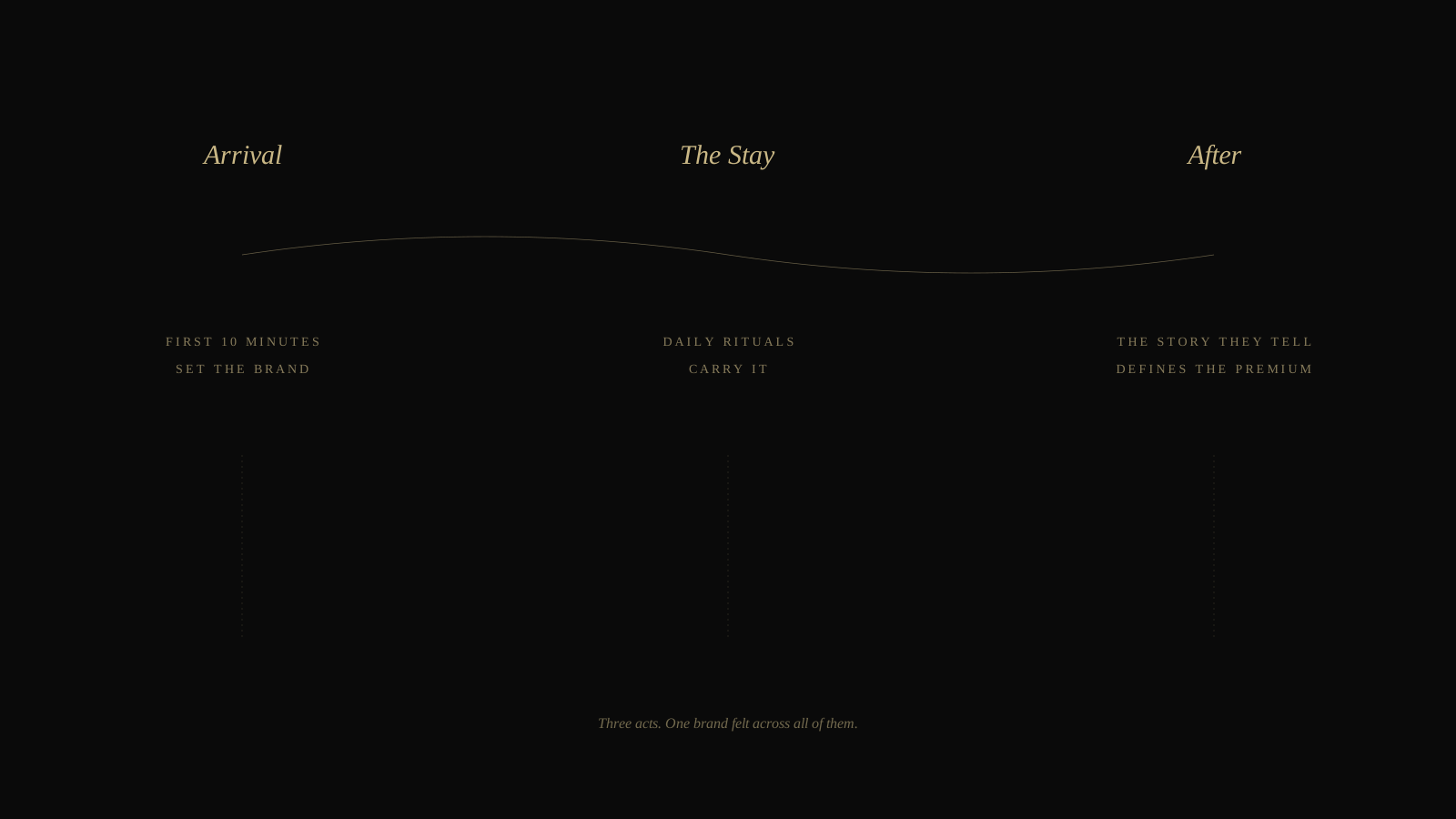
We think of hospitality brand building as three connected acts. The arrival, where the brand is first felt. The stay, where it's lived. The afterwards — the story the guest tells — where the premium gets earned, or doesn't.
Act one: the arrival
The first ten minutes of a guest's stay set ninety percent of the brand. The drive in. The threshold. The first staff member they meet. The smell of the lobby. The drink that's pressed into their hand before they've even checked in. This is where most properties spend the least design effort — they treat it as logistics — and this is where the strongest brands invest the most.
One property we worked with had a beautiful landscape, a strong founder, and an arrival experience that felt exactly like every other four-star resort in their category. We sat through three nights, watched the check-in flow, and identified four specific friction moments — the gap between the porter and the receptionist, the silence in the lift, the wait for the room key, and the unscripted first thirty seconds inside the room. We rewrote each of those into rituals. Eighteen months later, the most-mentioned phrase in their TripAdvisor reviews was "the welcome." That's brand starting to do its job — guests are now describing the property using language we put in their mouths.
Act two: the stay
The middle of a stay is where brand turns from a one-time impression into a lived environment. This is the territory of rituals — small, repeatable, brand-consistent moments that the property owns and nobody else does. A turn-down ceremony with a hand-written note from the chef about tomorrow's menu. A pre-dinner walk with the head gardener. A specific morning beverage that doesn't exist anywhere else. A library of books curated by the founder, with notes in the margins. The point is not that these are luxurious — many of them aren't expensive. The point is that they are specifically yours, and impossible to lift.
Amenities are interchangeable. Rituals aren't. A property whose differentiation is "we have a spa" is competing with every other property that has a spa. A property whose differentiation is "every Tuesday evening, the chef does a tasting in the kitchen for the four guests who book it 24 hours ahead" has built something only they own. The latter is what gets photographed, posted, and described. It's what stays in the memory. Industry research consistently shows that experiential differentiation — not amenity expansion — is the single highest correlate of repeat bookings and direct-channel preference.
Act three: the story
The third act is where brand work either compounds or evaporates. Did the guest have one thing they couldn't help but tell a friend about? If yes, the brand wins — that one thing seeds the next three bookings. If no, the property is now competing on the same OTA listing as forty other places, and price becomes the only differentiator.
The story doesn't engineer itself. It has to be designed. The most successful hospitality brands work backwards from this question — what is the one sentence we want guests to say when someone asks them about us? — and then they design the arrival, the stay, the meals, the rooms, the staff scripts, the social content and the post-stay communication to all support that one sentence. When everything across the property is pulling toward the same line, guests start saying it. When it isn't, they say nothing memorable at all.
The brands that don't fade aren't louder. They're more specific.
— A working principle in our hospitality engagements
The commercial case: from OTA to direct
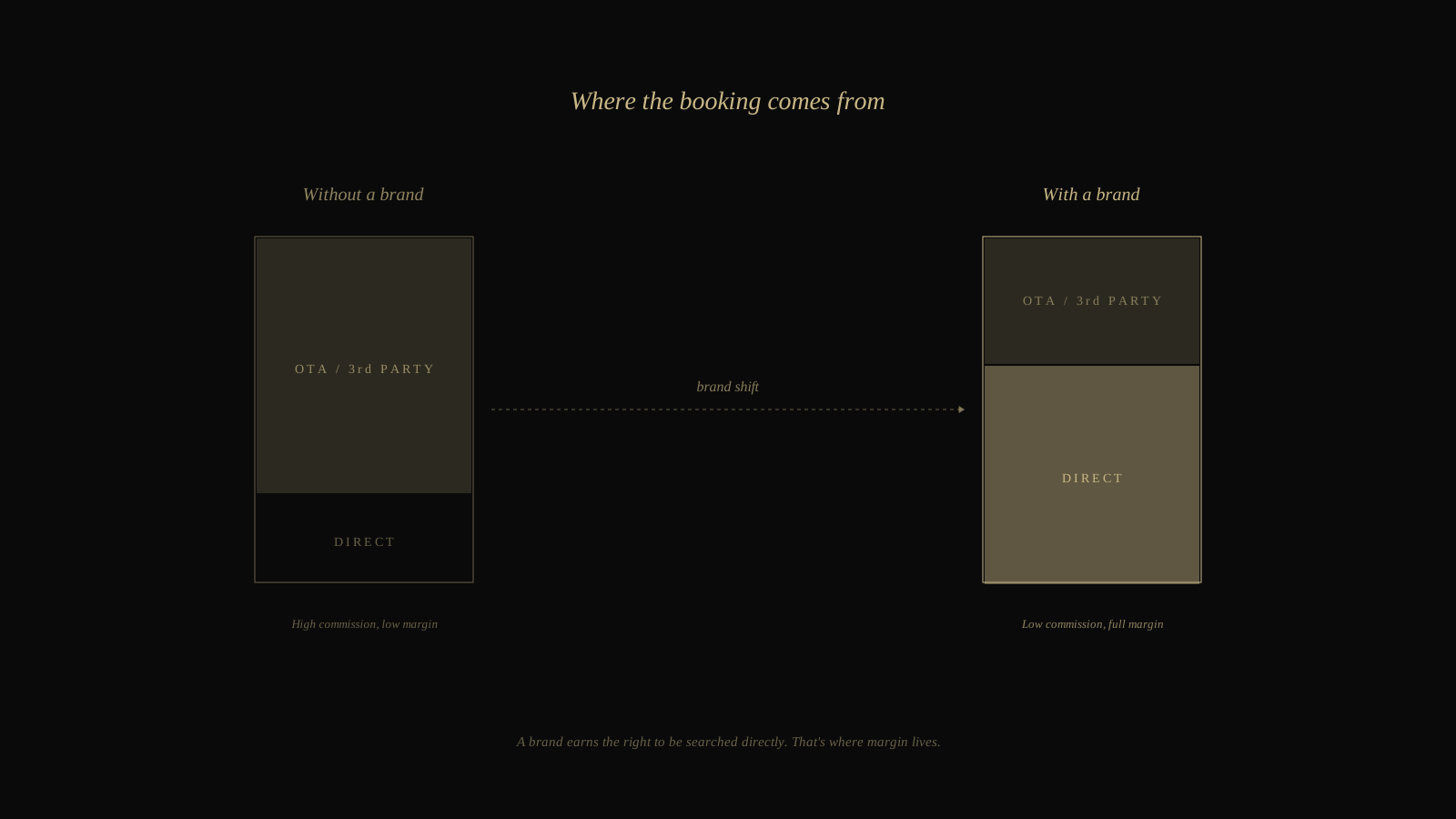
Here's the hard commercial reality of hospitality marketing in India: most independent properties get 60-80% of their bookings from OTAs — Booking.com, Agoda, MakeMyTrip — and pay 15-25% commission on each one. On a ₹15,000-a-night room, that's ₹2,250-3,750 to the OTA per booking. Across a year of decent occupancy, this is the difference between a thriving property and one running on margin fumes.
A direct brand is the only meaningful answer to this. When guests search for the property by name, when they bookmark the website, when they sign up for the newsletter, when they message Instagram before booking — the OTA gets removed from the chain. The booking comes direct. The margin stays in the property.
The path from OTA-dependent to direct-led is not fast, but it's well-trodden. We've seen the shift play out across several engagements, and the levers are consistent:
- A website worth landing on. Not a booking-engine wrapped in a logo. A site that tells the property's story well enough that someone arriving from Instagram doesn't bounce back to Agoda to compare prices. Photography, copy, room descriptions, neighbourhood guides, food stories — all working as one system.
- A content engine that builds desire over time. Instagram and Reels for visibility. YouTube for long-form (chef stories, owner walkthroughs, region context). A quarterly editorial newsletter to past guests with neighbourhood news, new arrivals, and quiet invitations.
- SEO scoped for traveller intent. Searches like "romantic boutique resort Udaipur direct booking" or "family resort Coorg with kids' programme" are where direct bookings start. We build the on-page SEO and the supporting content to rank for those.
- A direct-booking funnel that's easier than the OTA. WhatsApp Business with quick replies. A direct-booking promise (best rate, plus a small extra — a welcome drink, an upgrade, a late checkout). Email newsletters that recapture browsers who didn't book on the first visit.
- Reviews and reputation as a designed asset. A structured post-stay flow that asks for reviews on the platforms that matter, with the right phrasing and at the right moment. Google Business Profile reviews especially — they affect both direct discoverability and the OTA-equivalent search experience.
What we deliver — the full stack
Hospitality is a fragmented marketing category. Most properties are juggling a separate web vendor, a freelance photographer, a social agency, an SEO consultant, and an OTA-management partner. The five of them rarely talk to each other. The result is a brand that splinters across platforms — a different voice on Instagram than on the website, photography that doesn't match across channels, and a website built for a positioning the social agency was never told about. Our entire pitch is to do this under one roof.
Strategy & identity
Three to five weeks of close work. Property visits at every part of the day. Conversations with founders, GM, head chef, front-of-house, and a sample of past guests. The output is a positioning document, brand narrative, competitive landscape, vocabulary system (what staff call rooms, meals, moments), and a complete identity system — logo, marks, type, colour palette, photography direction, voice and writing guidelines.
Story & content
Where the work compounds. Property photography and brand films, ritual and experience design (the actual choreography, not just the photography), an editorial brand journal, Instagram and Reels production, YouTube long-form, newsletters and loyalty programmes, press kits ready for travel-publication outreach. Our in-house photography studio handles all the imagery, which means the website, social, and OTA all draw from the same coherent visual library — not a Frankenstein assembly of three different shoots.
Reach & direct bookings
Website built around direct conversion. SEO scoped for traveller intent. Google Business Profile maintained. Meta and Google paid layers, scoped tightly to the property's audience — not generic luxury-travel keywords. OTA listing optimisation (yes, OTAs still matter — they need the same brand discipline as your direct site). Quarterly performance reviews where we look at direct-vs-OTA ratio, occupancy patterns, ADR, and what's working.
The commercial argument for doing this under one roof is simple. When the website, social, photography, paid, and SEO are all built by people who sat in the same room when positioning was decided, every channel pulls in the same direction and the brand compounds. When they're scattered across five vendors, the brand fragments — and the property's marketing team spends a third of its time playing translator. We've seen the difference. It's significant.
The regions we work with
Our office is in Udaipur — a city with one of the highest concentrations of branded heritage properties in the world. We grew up watching how palace hotels, boutique forts, jungle camps and river-island stays built their brands. That's the context we work from.
Our hospitality engagements span Udaipur, Jaipur, Jodhpur and the broader Rajasthan circuit (palace and heritage), Goa (beach resorts and boutique stays), Kerala — particularly the Munnar–Coorg–Wayanad belt for wellness and wildlife properties, Rishikesh and Uttarakhand for wellness and adventure, the Himachal hill stations for boutique mountain stays, and destination properties for the wedding and wellness segments. For internationally-targeted properties — palaces marketing to GCC and European travellers, for example — we also handle English-first content, inbound SEO, and the OTA optimisation needed to capture traveller searches originating outside India.
The work compounds. The second hospitality engagement is faster than the first; the third faster still. We're not a generalist agency that took on a hotel client once. We've built the playbook because the category needs it, and because Udaipur is our home.